

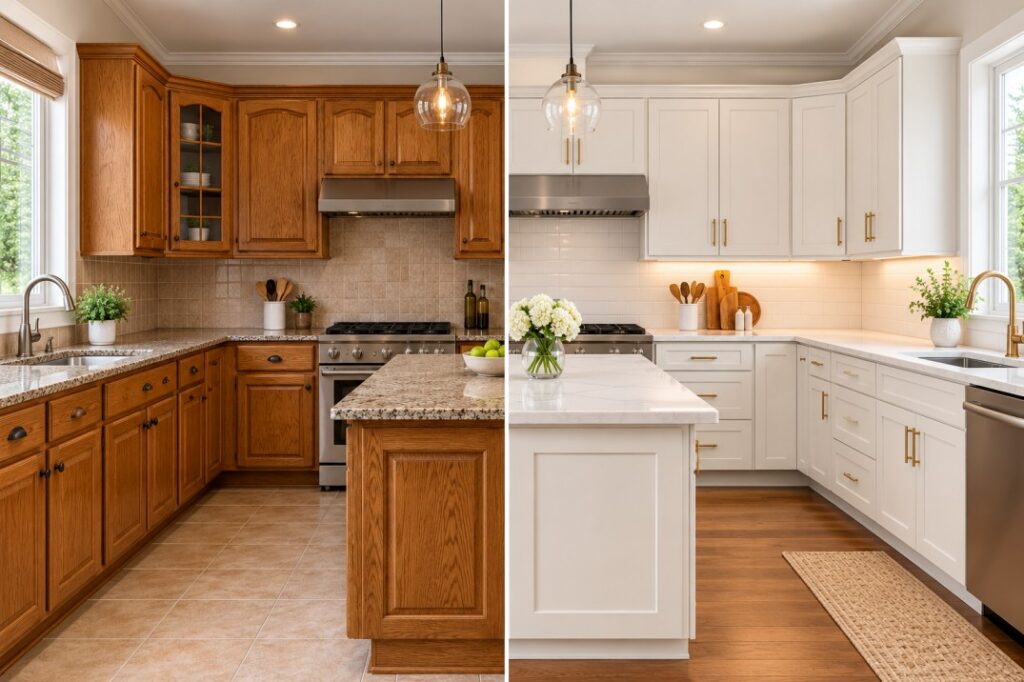
Kitchen cabinets play an important role in the appearance, storage, and functionality of your kitchen. When cabinets become outdated, damaged, or difficult to use, homeowners often consider two options: cabinet replacement or cabinet refacing.
Understanding the difference between these approaches can help you choose the right solution for your home, budget, and remodeling goals. While refacing can update the appearance of existing cabinets, replacement provides an opportunity to completely change the cabinet layout, storage, and design.
If you are planning a larger renovation, professional kitchen remodeling in Massachusetts can help you evaluate your existing kitchen and determine which option makes the most sense.
Kitchen Cabinet Replacement vs. Refacing: What Is the Difference?
The main difference is how much of the existing cabinetry is retained.
Cabinet refacing typically involves keeping the existing cabinet boxes while replacing or updating the visible surfaces. This may include new cabinet doors, drawer fronts, hardware, and exterior finishes. It can give an older kitchen a refreshed appearance without completely removing the existing cabinetry.
Cabinet replacement involves removing the existing cabinets and installing new ones. This provides much more flexibility because the new cabinets can be designed around your preferred layout, storage requirements, materials, and style.
The right choice depends on the condition of your existing cabinets and what you want to accomplish with the project.
When Should You Consider Cabinet Refacing?
Refacing may be a practical option when your existing cabinet boxes are structurally sound and you are generally satisfied with your kitchen layout.
Consider refacing if:
• The cabinet boxes are in good condition
• The existing layout works well for your household
• You want to update the appearance of your kitchen
• You want new cabinet doors and hardware
• You have adequate storage
• You do not need major layout changes
One of the main advantages of refacing is that it can provide a visual update without replacing the entire cabinet system. It may also reduce the amount of construction compared with a complete cabinet replacement.
However, refacing does not solve every cabinet problem. If the existing cabinets have significant water damage, structural deterioration, poor storage design, or an inefficient layout, replacing them may provide a better long term solution.
When Is Kitchen Cabinet Replacement a Better Option?
Cabinet replacement may be more appropriate when your existing cabinets no longer meet your functional or design needs.
You may want to consider replacement if:
• Cabinets are damaged or deteriorating
• The kitchen layout is inefficient
• Storage space is inadequate
• You want to change cabinet locations
• You need specialized storage features
• You want a completely different kitchen design
• You are planning a larger kitchen renovation
New cabinets allow you to reconsider how the entire kitchen works. You may be able to create better storage, improve access to frequently used items, incorporate a kitchen island, or adjust cabinet placement to improve movement through the room.
For homeowners considering a complete renovation, professional kitchen remodeling services can bring cabinet design, countertops, lighting, flooring, and other improvements together as part of one coordinated project.
Kitchen Cabinet Replacement vs. Refacing: Which Option Provides Better Functionality?
Appearance is only one factor when comparing these options. Functionality should also play an important role in your decision.
Refacing keeps the existing cabinet configuration. Therefore, if your current layout has limited storage or awkwardly positioned cabinets, refacing may not address those problems.
Replacement gives you greater control over the kitchen layout and storage configuration. New cabinets can be planned around the way you cook, clean, entertain, and use the kitchen every day.
For example, you may want deeper drawers for cookware, a dedicated pantry area, pull out storage, or cabinets designed to accommodate specific appliances.
If improving functionality is one of your main goals, cabinet replacement may provide more opportunities for meaningful changes.
How Budget Can Influence Your Decision
Budget is another important consideration. The overall cost of either option depends on the size of your kitchen, materials, labor, design requirements, and the condition of the existing space.
Refacing can require fewer new components because the existing cabinet boxes are retained. However, replacement may provide greater value when the existing cabinets have serious problems or when the kitchen requires a new layout.
Instead of choosing an option based only on the initial price, consider the long term purpose of the project. A lower cost update may make sense if you are happy with your kitchen layout. A more comprehensive investment may be worthwhile if you want to solve storage, layout, and functionality problems at the same time.
A professional contractor can assess your kitchen and explain the scope of each option before you make a decision.
Consider the Condition of Your Existing Cabinets
The condition of your existing cabinets should be one of the first things you evaluate.
Look for:
• Water damage
• Warped cabinet components
• Loose or damaged doors
• Weak cabinet boxes
• Difficult to operate drawers
• Deteriorated finishes
• Signs of long term wear
If the cabinet boxes remain strong and functional, refacing may be worth considering. If the underlying cabinetry is damaged or poorly designed, replacement can provide a more comprehensive solution.
An experienced remodeling professional can inspect the existing cabinetry and help identify issues that may not be obvious to a homeowner.
Think About Your Long Term Kitchen Goals
Before choosing between replacement and refacing, think about how you want your kitchen to function several years from now.
Ask yourself:
• Do I like my current kitchen layout?
• Do I have enough storage?
• Do I need more countertop space?
• Are the existing cabinets structurally sound?
• Do I want a completely different style?
• Am I planning other kitchen upgrades?
If you are satisfied with the basic layout and only want a visual update, refacing may be appropriate. If you want to change the layout, improve storage, or coordinate multiple remodeling improvements, replacement may be the better approach.
Kitchen Cabinet Replacement vs. Refacing: Make the Right Choice for Your Home
There is no single solution that works for every kitchen. Cabinet refacing can be a practical choice when your existing cabinetry is in good condition and your primary goal is to update its appearance. Cabinet replacement offers greater flexibility when you need improved storage, a different layout, or a more complete kitchen transformation.
The best decision starts with evaluating the condition of your existing cabinets, understanding your remodeling goals, and considering how you use your kitchen every day.
If you are unsure which option is right for your home, Bonsai Builders Remodeling & Additions can help you explore your kitchen remodeling options and develop a plan based on your space, needs, and goals.